Skip to Content

The Science


Targeting persistence, not resistance

Most approaches to bacterial infections focus on killing actively growing bacteria or overcoming resistance mechanisms. Santero takes a fundamentally different path.

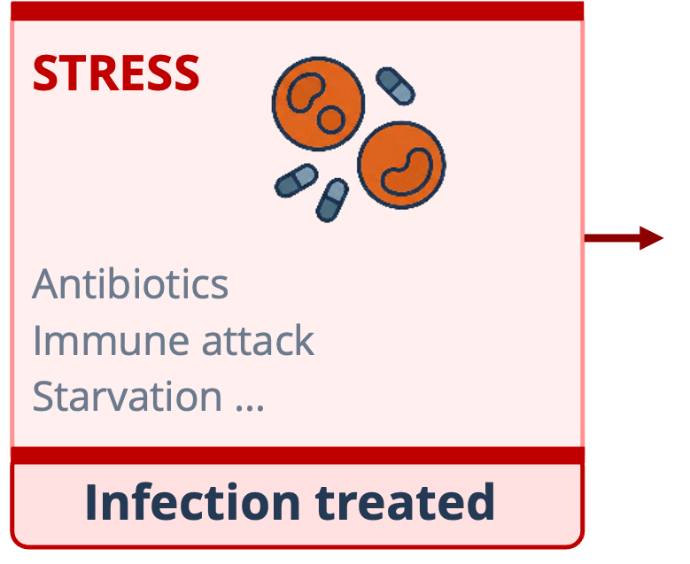
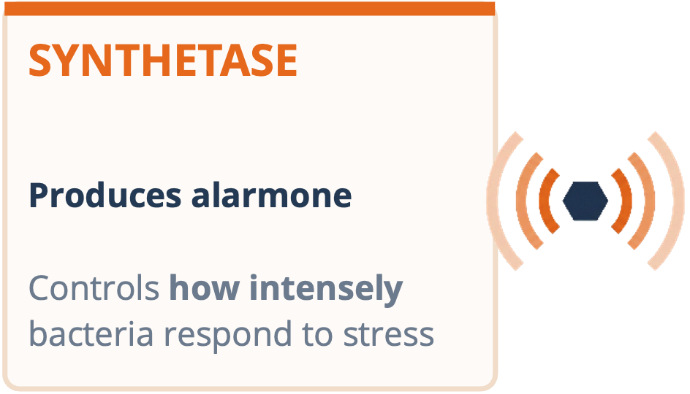
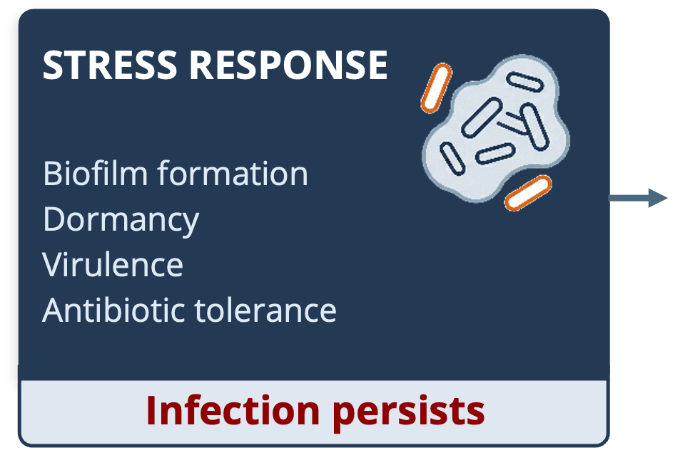
Under stress, bacteria activate an RSH enzyme with Synthetase activity to rapidly synthesise alarmone molecules. These trigger a global reprogramming of gene transcription that enables survival in hostile environments. These alarmones induce a dormancy programme in which bacteria enter a metabolically inactive state - evading host immune defences and becoming refractory to conventional antimicrobial treatment. 

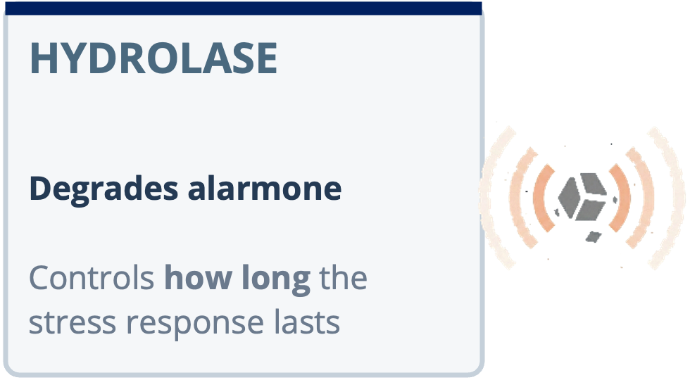
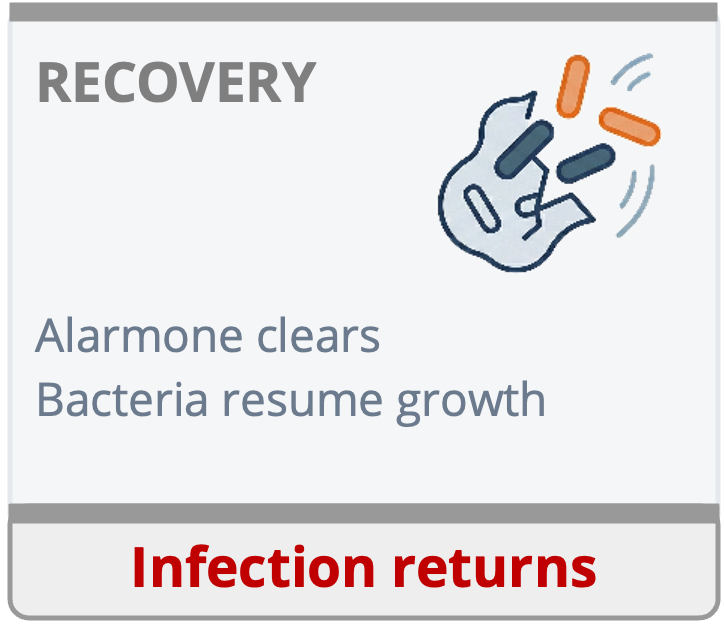
Upon resolution of the external stress, a second RSH enzyme with Hydrolase activity degrades the alarmones, terminating the stress response and allowing bacteria to resume normal growth.

This is not resistance. It is persistence: a reversible survival strategy that explains why chronic infections relapse after apparently successful therapy.

Santero's compounds inhibit these RSH enzymes, Synthetase and Hydrolase, leading to the elimination of the bacterial reservoir driving infections refractory to current treatments.


The Platform

Two targets, broad therapeutic potential

Synthetase and Hydrolase enzymes are present in virtually every bacterial pathogen, but absent in humans. Santero's platform generates small molecules active across both Gram-positive bacterial organisms (such as Staphylococcus aureus) and Gram-negative organisms (such as Pseudomonas aeruginosa and Klebsiella pneumoniae). This breadth creates optionality across multiple clinical indications.


Platform Architecture

  • Pathogen Breadth: Active across Gram-negative and Gram-positive and species

  • Disease Spectrum: Applicable to chronic respiratory, orthopaedic, wound, and acute hospital infections caused by pathogenic bacteria, including multi-drug resistance species

  • Two Opportunities: Direct killing of the bacteria, and resensitization of dormant bacteria to existing therapies

Pipeline



NCFB Programme (Lead)

Targeting reduction in exacerbation in chronic Pseudomonas aeruginosa positive non-cystic fibrosis bronchiectasis patients. Addressing the persistent bacterial reservoir that drives the exacerbation cycle.


Acute Programme

Targeting hospital-acquired and ventilator-associated pneumonia (HABP/VABP).


Discovery

Additional indications under evaluation, including prosthetic joint infection, chronic wound infection, mycobacterium infections.


Intellectual Property

Santero's technology is protected by a robust patent library. The company holds exclusive licences to foundational method and screening patents from the Université Libre de Bruxelles.